A slower supply expansion combined with improving demand impulses could support stronger earnings for major listed salmon producers in the coming years.
Henrik Longva Knutsen, seafood analyst at Pareto Securities
After a year of strong growth in aquaculture production, the seafood industry could be entering a new phase. While salmon supply growth is expected to slow in the coming years, demand continues to expand – particularly in Asia. At this year's North Atlantic Seafood Forum, Pareto Securities' seafood analyst shared his outlook for the seafood sector: from salmon farming and whitefish to pelagic fisheries and new production technologies.



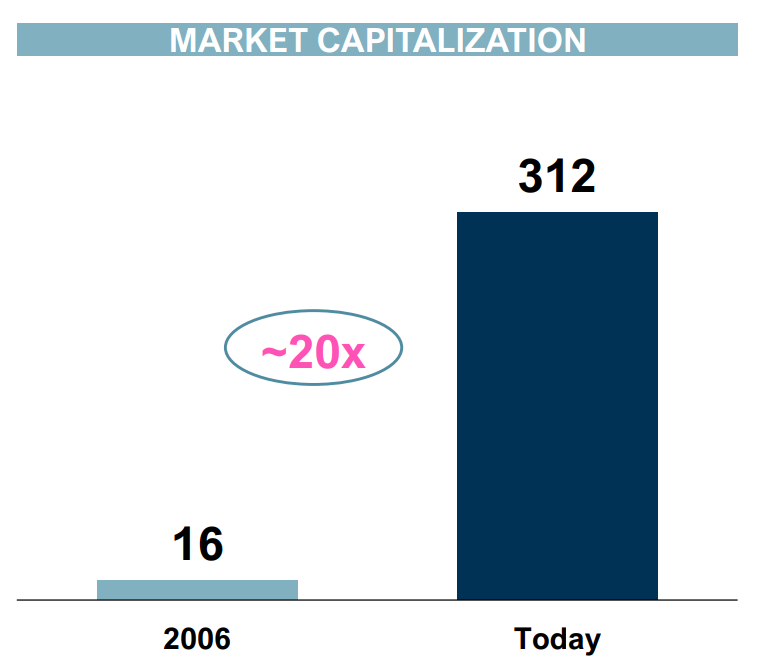
Over the past two decades, the seafood sector has grown strongly. The combined market value of listed seafood companies on the Oslo Stock Exchange has increased from 16 billion NOK to more than 300 billion NOK, with the number of listed companies rising from 6 to 23.
Meanwhile, seafood continues to outperform other animal proteins globally. Total seafood consumption has increased from 95 million tonnes in 2006 to around 152 million tonnes today.
Much of this expansion has been driven by the salmon sector. Over the past few years, global salmon supply has grown rapidly, contributing to weaker prices in 2025. But according to Pareto Securities’ seafood analyst Henrik Longva Knutsen, global salmon supply growth is expected to ease to around two percent in 2026.
A slower supply expansion combined with improving demand impulses could support stronger earnings for major listed salmon producers in the coming years.
Henrik Longva Knutsen, seafood analyst at Pareto Securities
At the same time, demand continues to grow, supported by a rising middle class in Asia and increasing global demand for healthy protein sources. Lower air freight costs have also made it cheaper to export fresh salmon to Asian markets, making the product more accessible to consumers.
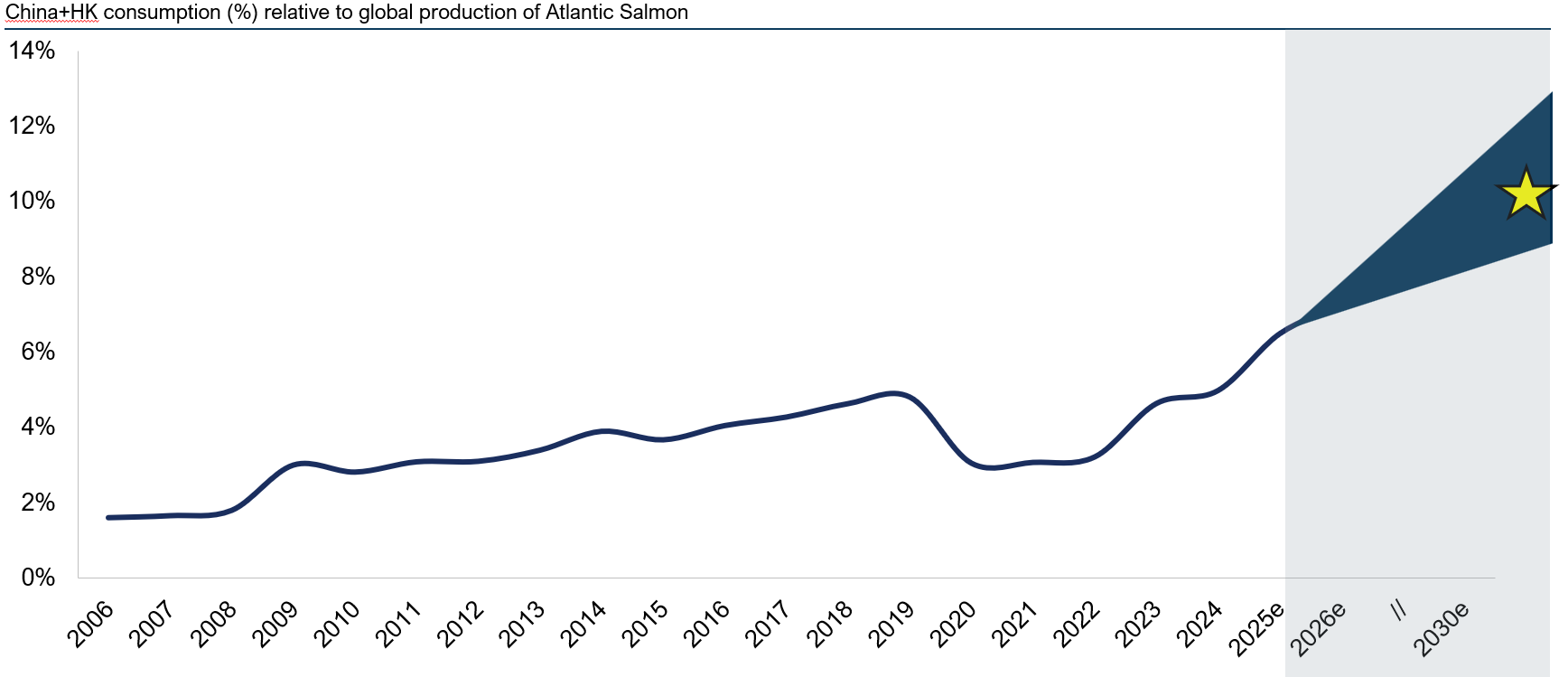
In particular, China has become one of the most important growth markets for salmon, with consumption growing by around 13 percent annually over the past two decades.
By 2030, we estimate that around ten percent of global salmon production could be consumed in China, says Henrik Longva Knutsen.
The whitefish market is also facing tighter supply. Current estimates suggest the cod population has declined by around 20 percent. Lower cod quotas are therefore expected to support higher prices in the coming years.
At the same time, the Institute of Marine Research expects stock levels to improve as stronger year classes reach harvestable size. According to the institute, annual catches of around 300-350 thousand tonnes could represent a sustainable level over time.
One of the most interesting developments in the sector, according to Pareto Securities’ seafood analyst Henrik Longva Knutsen, is that growth is no longer just about increasing volumes. New production technologies, such as laser systems targeting sea lice and submerged pens, are also improving biological performance, leading to lower mortality rates and higher productivity.
Around 30 percent of Norwegian farming sites now have Stingray systems installed. AKVA Group also reports that more than 400 Nautilus submerged pens have been deployed, helping reduce the need for treatments.
Henrik Longva Knutsen, seafood analyst at Pareto Securities
Another important development in the sector is the growing role of land-based salmon farming. Early expectations proved too optimistic on both volumes and capex, but production from existing facilities is expected to increase in 2026.
As land-based farming is the most tangible near-term growth opportunity for the sector, experience so far shows that biological performance and how quickly facilities can ramp up production matter more than headline capacity targets.
Learn more about land-based farming through our client case with Salmon Evolution
Despite improving biological conditions and technological progress, regulation remains an important factor for the seafood industry, according to Henrik Longva Knutsen. In Norway, several salmon farmers are frustrated with the current regulatory direction and are calling for a more flexible framework based on site-specific biological performance.
Chilean producers, on the other hand, appear more positive, as the current government is seen as more supportive of the salmon industry.
Regulatory decisions in Norway and Chile – which together accounted for almost 80 percent of global salmon supply in 2025 – are likely to play a key role in shaping future production growth.
NASF is one of the world’s leading conferences for the global seafood industry, bringing together decision-makers, investors, analysts, industry leaders and companies.
Next year’s North Atlantic Seafood Forum will take place 9-11 March 2027 in Bergen.
Are you looking for financial advice in the seafood sector?
Get in touch with our Head of Seafood Investment Banking, Carl-Emil Johannessen
Do you have questions about the seafood sector?
Contact our seafood analyst Henrik Longva Knutsen
Looking for more market insights? Access our research and online trading platform, where our analysts publish regular reports on the seafood sector and other industries, or reach out to your contact person at Pareto Securities.

