
"Attrition is won on production lines, not budgets. Russia's shell output is two to three times that of Europe. Thirty years of underinvestment cannot be reversed in three."
Fabian Jørgensen, equity analyst at Pareto Securities
Europe is ramping up defence spending at a historic pace, but higher budgets are only part of the story. At Pareto Securities' Defence Seminar, Equity Analyst Fabian Jørgensen highlighted how a fundamental shift in procurement, production capacity and supply chains is reshaping the investment case for the European defence industry.




At Pareto Securities' Defence Seminar at Hotel Continental, Equity Analyst Fabian Jørgensen presented an update on the European defence ramp-up and the structural changes now taking place across the industry.
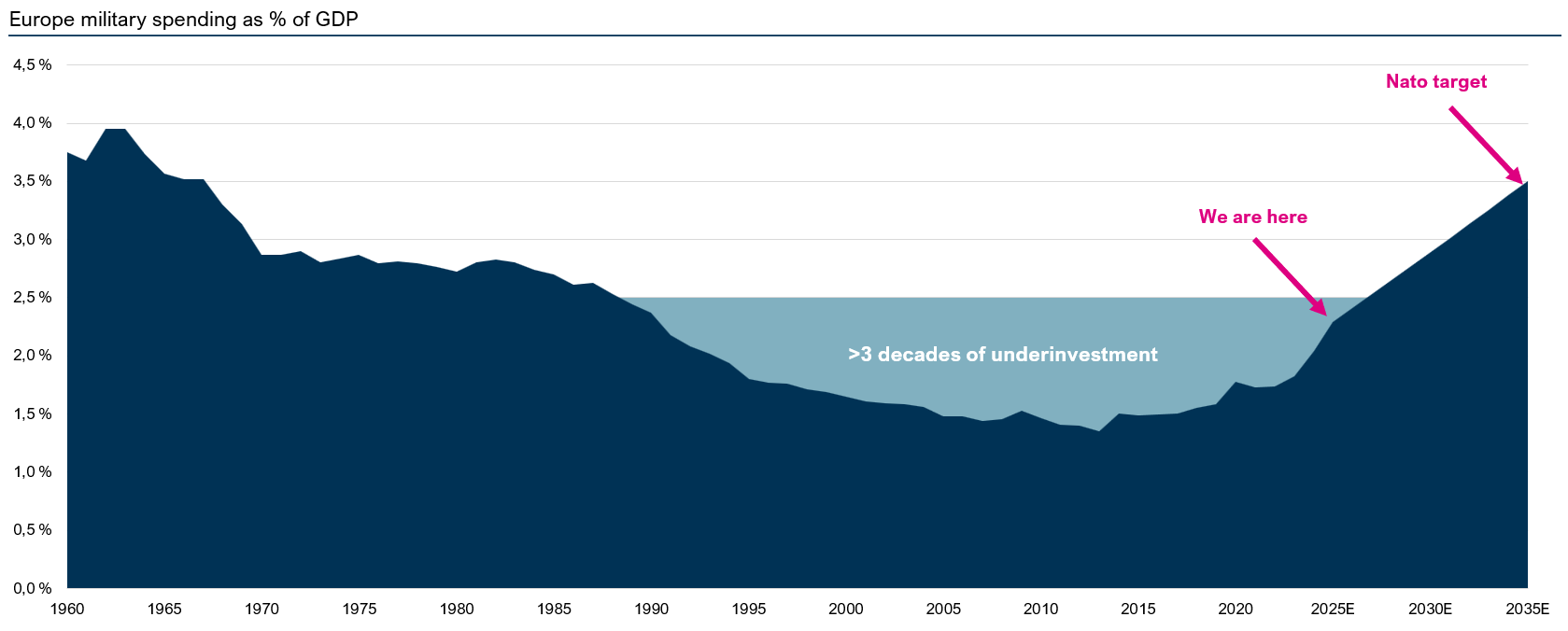
Europe has doubled its defence spending since 2014 and today outspends Russia roughly four times over on paper. Adjusted for purchasing power, however, that advantage falls to around 1.5x.
For Jørgensen, this illustrates why headline defence budgets do not tell the full story.
"Attrition is won on production lines, not budgets. Russia's shell output is two to three times that of Europe. Thirty years of underinvestment cannot be reversed in three."
After decades of limited investment in defence capacity, European countries are now facing the challenge of expanding production at the same time as they rebuild inventories and modernise their armed forces.
"Attrition is won on production lines, not budgets. Russia's shell output is two to three times that of Europe. Thirty years of underinvestment cannot be reversed in three."
Fabian Jørgensen, equity analyst at Pareto Securities
One of the most important changes is taking place in procurement.
Around half of Europe's firepower is imported, with approximately 74 percent of those imports coming from the US, Israel and South Korea. The largest capability gaps are concentrated in strategically important areas such as aircraft, missiles, vehicles and artillery.
Russia's shell output is two to three times that of Europe, and while combined Russian and Iranian ballistic missile production exceeds NATO interceptor output by more than 1,000 units annually.
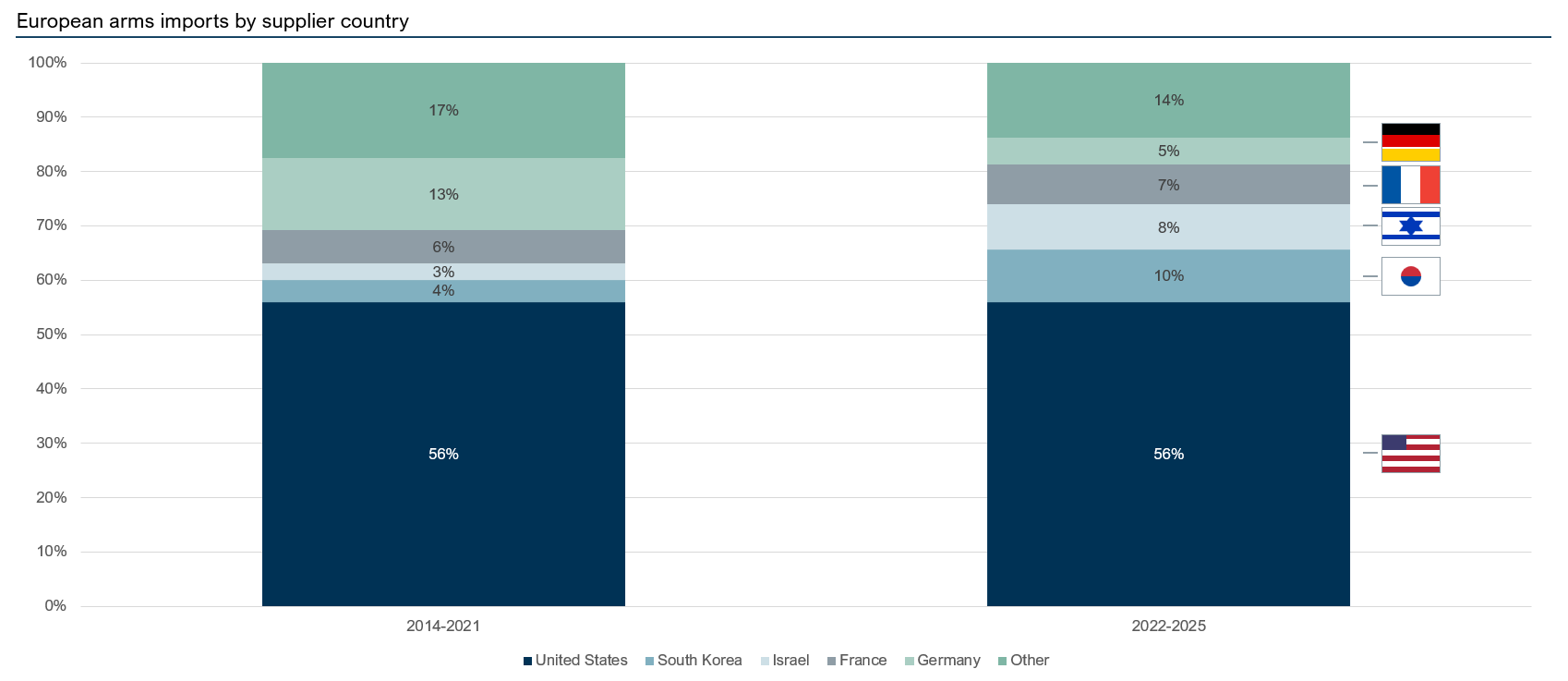
At the same time, long delivery times from US suppliers are making European alternatives increasingly important.
"Onshoring is now a procurement necessity, not a preference," says Jørgensen.
With delivery times for some US defence systems stretching to as much as five years, European governments are increasingly looking towards domestic and regional suppliers. This creates opportunities not only for Europe's largest defence companies, but throughout the supply chain.
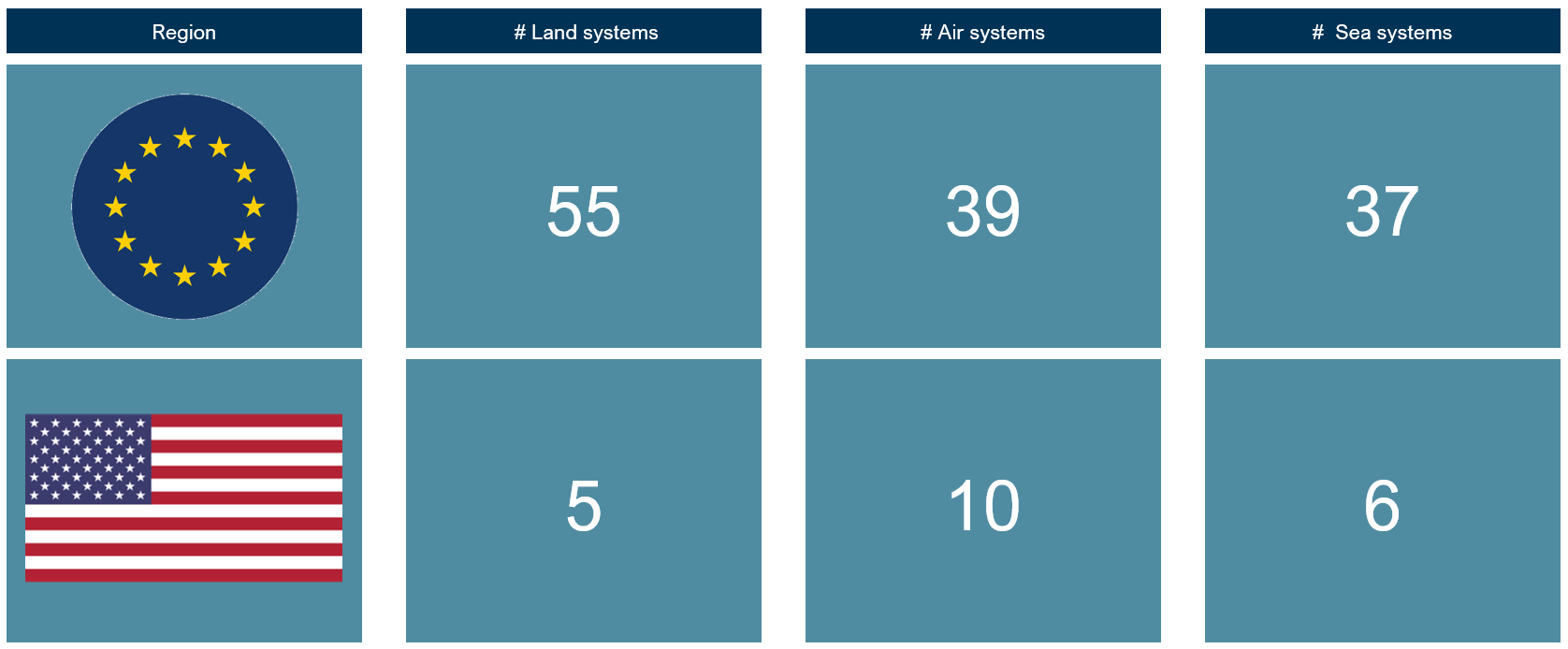
While spending is accelerating, Europe's defence industry remains highly fragmented.
Europe operates 55 different land systems, 37 air systems and 39 naval systems. The comparable numbers in the US are just 5, 6 and 10.
That fragmentation has historically resulted in smaller production runs, higher costs and less efficient supply chains. As European countries seek to increase production capacity, greater standardisation and cooperation could therefore become increasingly important.
Bilateral defence-industrial agreements are already playing a larger role, combining procurement with industrial cooperation, local production and shared platforms.
"Hardware first, treaty second. Commonality, offsets and shared fleets are substituting for formal security guarantees," says Jørgensen.
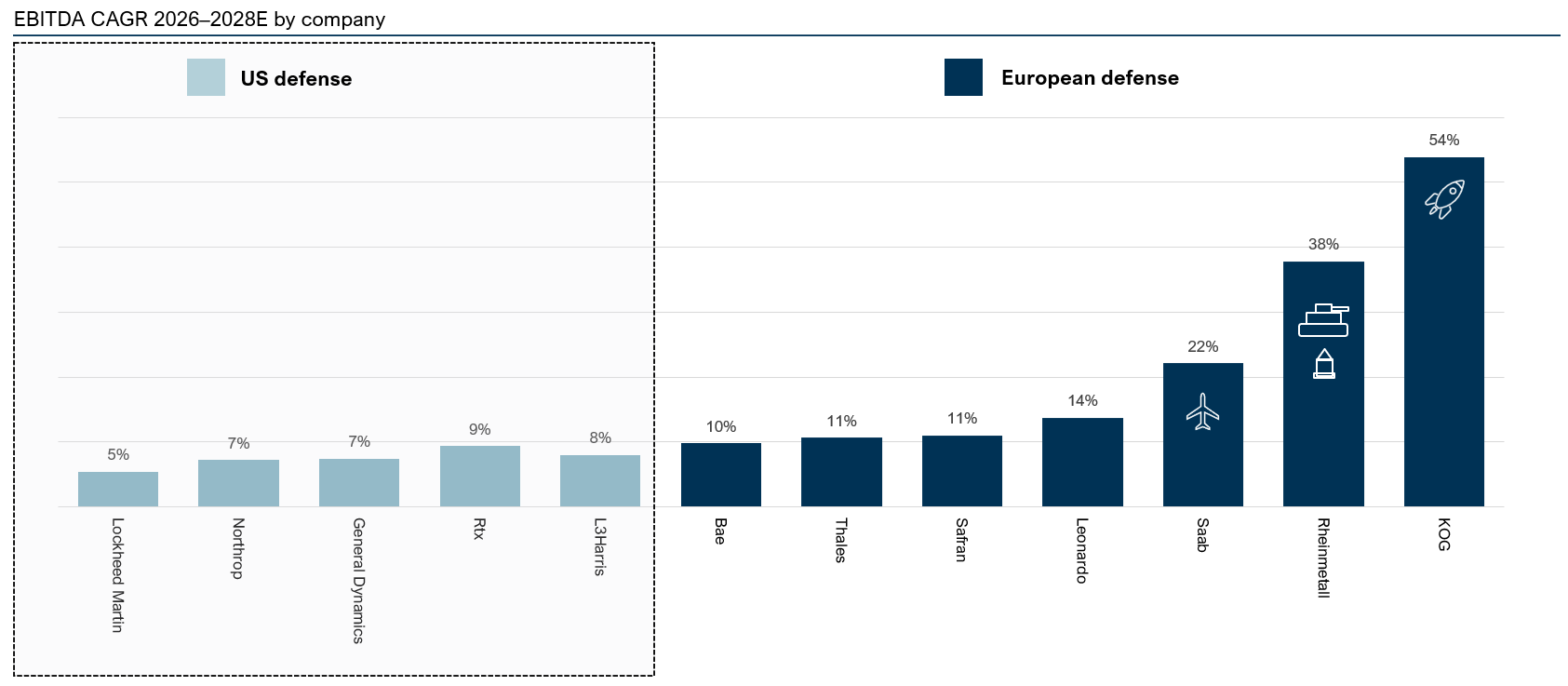
Pareto Securities expects European equipment spending to roughly double from current levels. This could translate into estimated annual growth of around 15 percent for European defence companies through 2030.
The opportunity also extends well beyond the major European OEMs.
As production volumes increase, the same demand is flowing further down the value chain to component suppliers, contract manufacturers and specialist industrial companies. Contract manufacturers exposed to defence have already seen organic growth accelerate towards around 10 percent, increasingly decoupling from the broader industrial cycle.
The result is a defence investment cycle that is becoming broader and more structural. Higher budgets provide the funding, but changes in procurement, onshoring and production capacity could ultimately determine where the biggest opportunities emerge.
Looking for financial advice in the defence sector? Get in touch with our Defence Investment Banking team in Norway Kenneth Sivertsen or our team in Sweden Tom Guinchard.
Questions about the defence sector? Contact our defence analysts Fabian Jørgensen or Thomas Blikstad.
Visit our events page to see our upcoming seminars and investor conferences.

